Bringing engineering students and doctors together to combat cancer
More than 22,000 people are expected to be diagnosed with esophageal cancer in the US this year, according to the American Cancer Society. Of those people, most will have esophageal adenocarcinoma (EAC), a type of cancer that begins in the cells of the glands in the esophagus.
Cure rates for patients diagnosed early with EAC are over 80 percent. Unfortunately, a low percentage of at-risk patients actually receive early diagnoses.
Northwestern Engineering students are working with clinicians from Northwestern Medicine to change that.
A new elective course brought students from the Segal Design Institute and the Department of Biomedical Engineering together with clinicians from the Northwestern Medicine Kenneth C. Griffin Esophageal Center. The goal was to identify opportunities to increase the number of at-risk patients who are screened.
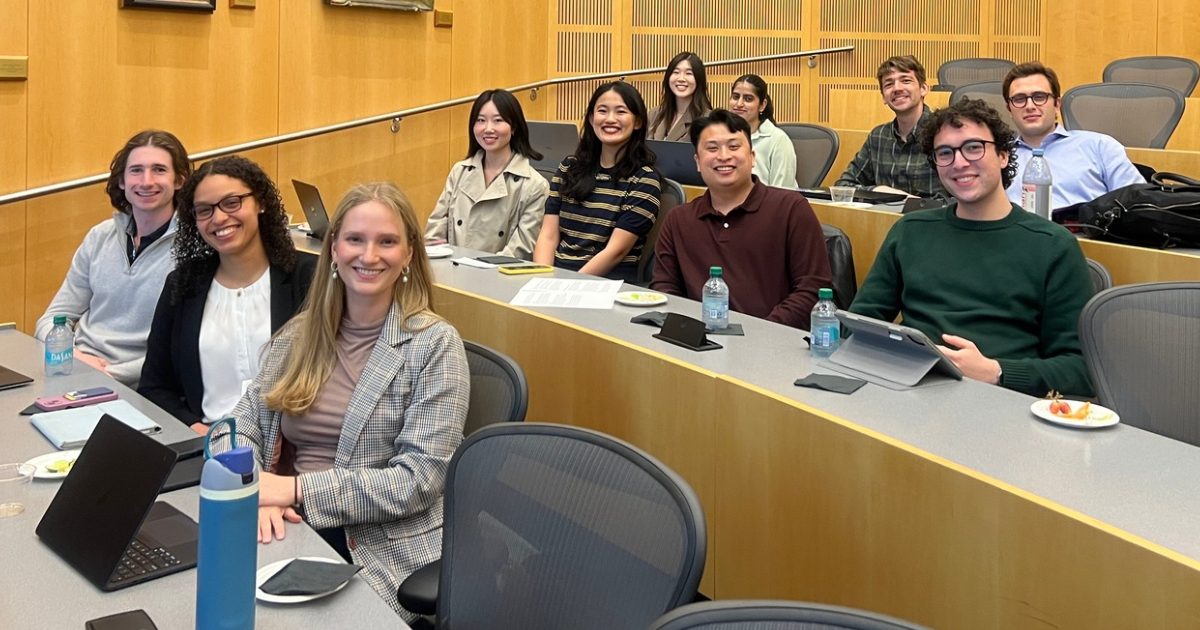
Needfinding in Clinical Environments offered 11 graduate students in the Engineering Design Innovation (EDI) and Biomedical Engineering (BME) programs the chance to work collaboratively and develop needfinding and opportunity identification skills critical to early detection.
"We wanted to take the brainpower of BME and EDI and combine them in a needfinding course so that we could really ground innovation in human-centered design," said adjunct lecturer Erica Isaacs (EDI '17). "What that means is when we're looking to identify and move innovation forward, we're grounding it in people, we're grounding it in human needs."
Isaacs co-taught the course with BME director Chamille Lescott. Lescott conceptualized and developed Needfinding in Clinical Environments in partnership with EDI director Amy O'Keefe.
Beginning with Barrett's esophagus
Needfinding refers to the process of interacting with and studying people to discover their unmet needs. During the 10-week class, students made clinical observations, led stakeholder interviews, and performed secondary research in medical contexts to identify opportunities for innovation within the Northwestern Medicine Gastroenterology (GI) practice led by John Pandolfino, chief of gastroenterology and hepatology in the Department of Medicine.
More specifically, students used the backdrop of Srinadh Komanduri’s high-risk esophageal cancer screening clinic which encompasses patient visits, in-office screening procedures, and sedated endoscopic procedures. Komanduri, the associate chief of gastroenterology and hepatology and the director of system integration for the Northwestern Medicine Digestive Health Institute, described the concept as newer in GI where much of the workflow remains inefficient and uncertain.
“There is a clear clinical need to identify the proper operational and clinical workflows to optimize screening for this deadly cancer. The students identified multiple opportunities from a fresh vantage point that are being put into practice today," Komanduri said. "This joint relationship was enlightening and refreshing to me, but ultimately the collaboration will directly help my patients. The course was a tremendous success."
The students' work started with an introduction to Barrett's esophagus.
Barrett's esophagus (BE) is a condition where acid reflux damages the lining of the esophagus. BE is the only condition known to lead to EAC, according to the Esophageal Cancer Action Network.
The students learned that less than 20 percent of patients diagnosed with EAC were previously diagnosed with BE. Of the approximate 120 million Americans who have three or more compounding BE risk factors, only 7 percent are screened, the students found.
With that knowledge, the students looked to identify ways to reach asymptomatic patients so they can be screened for BE.
The students used the human-centered design method taught in EDI to discover unmet needs and then define the most critical opportunities for change. These opportunities are intended to serve as a foundation for future coursework, research, and product development efforts.
Making a difference for patients and clinicians
Students identified 11 opportunity areas for further exploration. These areas were separated into four categories:
● Patient identification
● Provider and patient experience
● Screening technology
● Implementation
Opportunity areas ranged from expanding digital entry points for broadening BE screening to quantifying mechanical markers to repositioning endoscopy as a treatment.
Each opportunity area followed a consistent framework designed to provide essential context, articulate the significance of the need, and inspire exploration of potential solutions. This framework featured:
● An engineering problem statement that defines the unmet need
● Context
● Impact
● "How might we …" open-ended prompts that reframe the problem space as opportunities for ideation
● Who could own the opportunity moving forward
● Types of solution spaces, such as a digital, physical, service-based, policy, workflow, or a hybrid approach
"Northwestern Medicine clinical partners responded positively to the students' work, noting that several ideas were ready for immediate implementation," O'Keefe said. "They went further, indicating that the findings would be taken directly into upcoming quality meetings and that students had likely already influenced how processes would be improved in the GI clinic."
Pandolfino supported O'Keefe's perspective.
"What excited me most about this collaboration was getting a completely different perspective to help us improve screening for esophageal cancer," he said. "Our current paradigm is not working and the students brought great ideas that will improve access and outcomes."
Lescott, O'Keefe, and Isaacs are currently looking to connect Northwestern Medicine clinicians and researchers interested in the opportunity areas with engineers and designers who could build on the students' findings.
"We aim to secure quick wins through student research engagement while laying the groundwork for longer-term studies that may require grant funding," Lescott said. "As we move to distribute these engineering projects, our ultimate goal is to develop solutions Northwestern Medicine can adopt within the next year, with meaningful impact on both the patient and clinical experience."